

What Your Scalp Absorbs, Your Body Absorbs

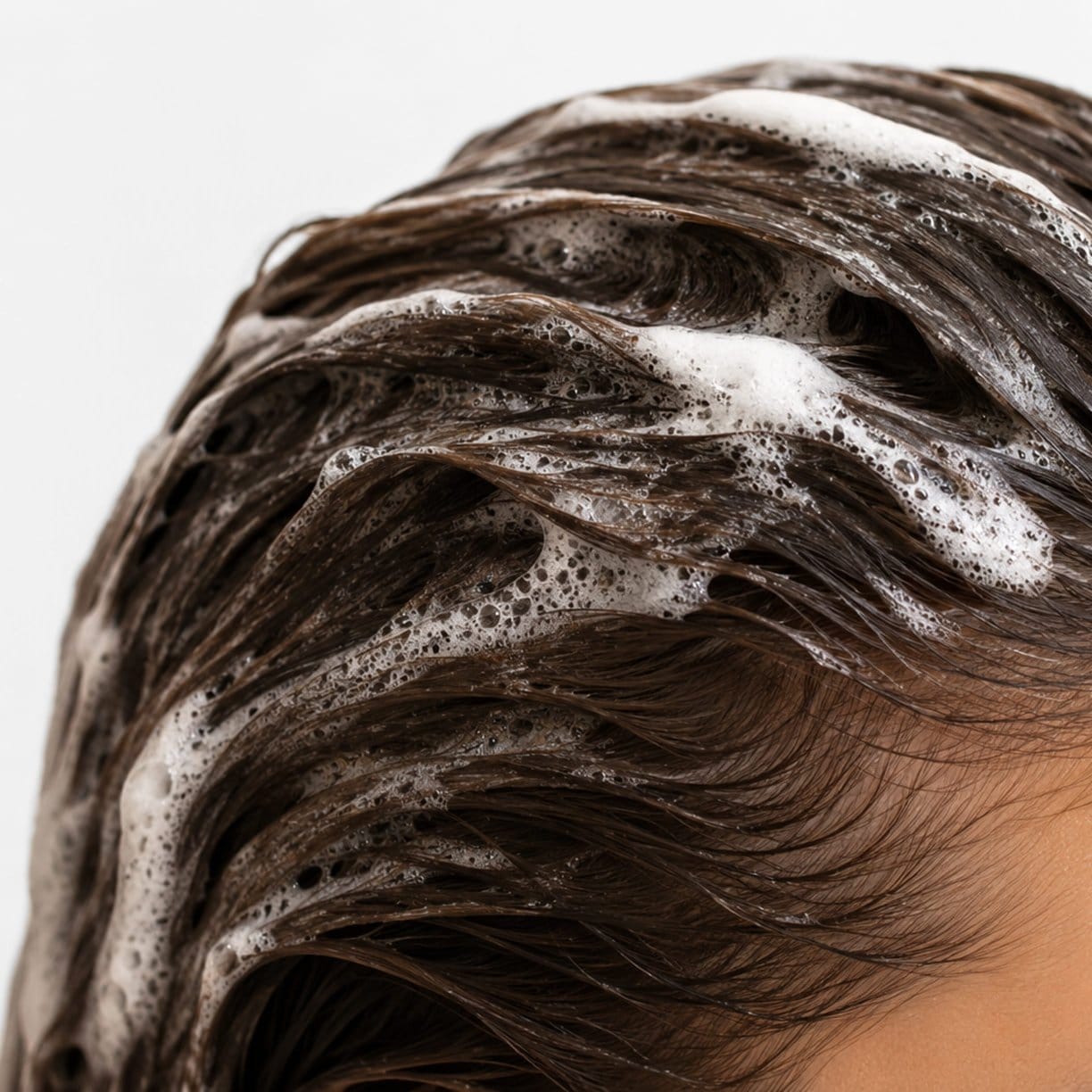
Most people treat the scalp as scenery. The surface hair happens to grow out of, worth attention only when it itches, flakes, or thins. But the scalp is skin, and skin with a particular set of qualities: dense with follicles, richly supplied with blood vessels, and in contact with more product, more often, than almost anywhere else on the body.
Skin Is an Organ, Not a Wrapper
Skin is the largest organ in the human body, and it is selectively permeable rather than sealed. Topically applied ingredients rarely enter the bloodstream. Your skin barrier is highly effective at keeping out what doesn't belong. But studies of regional absorption have consistently found the scalp among the more permeable areas, measured several times higher than the forearm, largely because follicles and their openings offer a route that flat skin does not.
So the useful question is never simply does this absorb. It is how much, how often, and what happens to whatever gets through. Most people ask the first, get an ambiguous answer, and stop there. The second and third are where the real information lives.
Frequency Is the Variable Nobody Weighs
A single exposure to almost anything is unremarkable. What matters is repetition, and haircare is one of the most repeated habits in a lifetime. Most people use shampoo two to four times a week for decades, massaging it directly into the scalp and leaving it there through every shower.
That makes frequency the most practical filter available when deciding where to start. A product you reach for twice a year barely registers. The one you reach for every few days, on the most permeable skin you have, is worth reading properly. The exposure isn’t one wash. It’s ten thousand of them.
What Goes Down the Drain Comes Back Up
There is a second loop, less obvious, that most ingredient conversations skip entirely.
Consider a polyester t-shirt. Synthetic fabric is petroleum made into plastic, and every wash sheds microplastics into the water system. Municipal filtration was not designed to capture particles that small, so they circulate — into waterways, into agriculture, into food, and back into us. Each step is invisible, which is why almost nobody sees the circle.
Rinse-off haircare enters the same system. What comes out of your hair goes down the drain, and what does not break down persists. Food has a parallel principle called biomagnification: a toxin an animal takes in through its feed grows more concentrated as it moves up the food chain, reaching you amplified rather than diluted. The mechanisms differ; the lesson is identical. Nothing is actually thrown away. It just moves.
How to Actually Read a Label
Certifications and ingredient lists are the only accountable parts of a package. Everything else is copywriting.
The First Five: Ingredient lists are ordered by weight. A product can legitimately say “made with organic ingredients” when the organic ingredient sits twentieth on the list — a trace, present mainly so the phrase can appear on the front. Read the first five and you have read most of what is in the bottle. It's advice we've heard from voices outside this brand too — sustainability strategist Lailee Waxman makes the identical point on our podcast: "Look at the first five ingredients on a label, they tell you the most." Same habit, same payoff, whether it's a fashion supply chain or a shampoo bottle.
Certification Over Adjective: “Natural,” “clean,” and “botanical” have no gatekeeper. Certifications do. USDA Organic is rigorous, and in food it is the mark that counts. Outside food, the work falls to third parties: NSF/ANSI 305 sets a minimum threshold of organic content for personal care, with rules on sourcing and processing; the Environmental Working Group assesses toxicity alongside sourcing; MADE SAFE screens specifically for endocrine disruptors. Decide your priority, then look for the certification that actually measures it. It's the same due diligence worth doing on the specific ingredients most likely to earn a callout on a hair care label, sulfates, silicones, and parabens among them.
Fragrance and Dye: “Fragrance” can mean a single disclosed botanical or an undisclosed proprietary blend, and the label often will not distinguish. Dye is almost always cosmetic — color that changes nothing about how a product performs. Neither is disqualifying. Both are worth asking about.
Words You Don’t Recognize: Not every long chemical name is a problem; plenty are ordinary and well understood. But if you cannot identify something, look it up. One search usually settles whether it is a benign plant derivative or something heavily processed you would rather not apply twice a week.
The Brand Behind the Bottle: Reputation is public now. If a company overstates what it does, someone has usually written about it. Five minutes on a brand’s own process pages tells you more than the front of the label ever will. That is precisely why our Leaping Bunny and PETA certifications deserve more than a badge on a label. Third party accountability is a standard worth explaining, not just showing off.

The Real Waste of Money Is Inconsistency
The expensive mistake in this category is not buying a good product. It is buying twelve of them.
True wellness is about daily habits, not collecting expensive gadgets. Buying red light panels or high end supplement stacks means little if they sit untouched after a few weeks of use. Real results come from compounding routines over time. A modest, 100% natural formula integrated into every single wash will do far more for your hair than a costly treatment used once in a while.
Consistency is also what makes gradual change possible. Throwing out every product in the house at once produces a startling amount of waste and pushes those same ingredients straight into the environment they were being avoided for. Finish the half-empty bottle. Replace things at the point of repurchase, starting with whatever you use most often.
Not Everything Needs to Change at Once
Divide your life into three categories: what goes in you (food, water, cookware), what goes on you (personal care, clothing, bedding), and what's just around you (furniture, rugs, cleaning products, air). The goal isn't to audit all three at once. It's to know where to start.
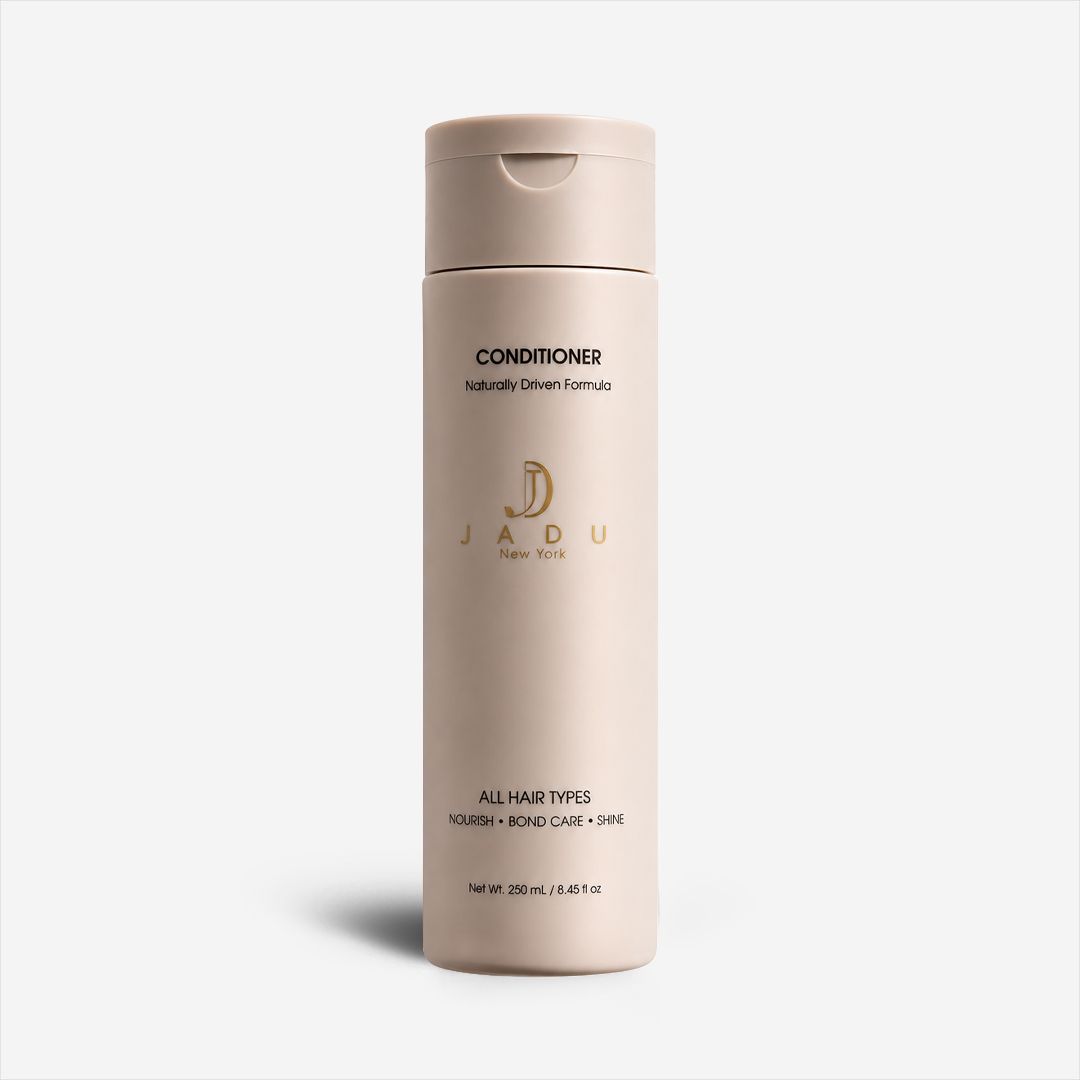
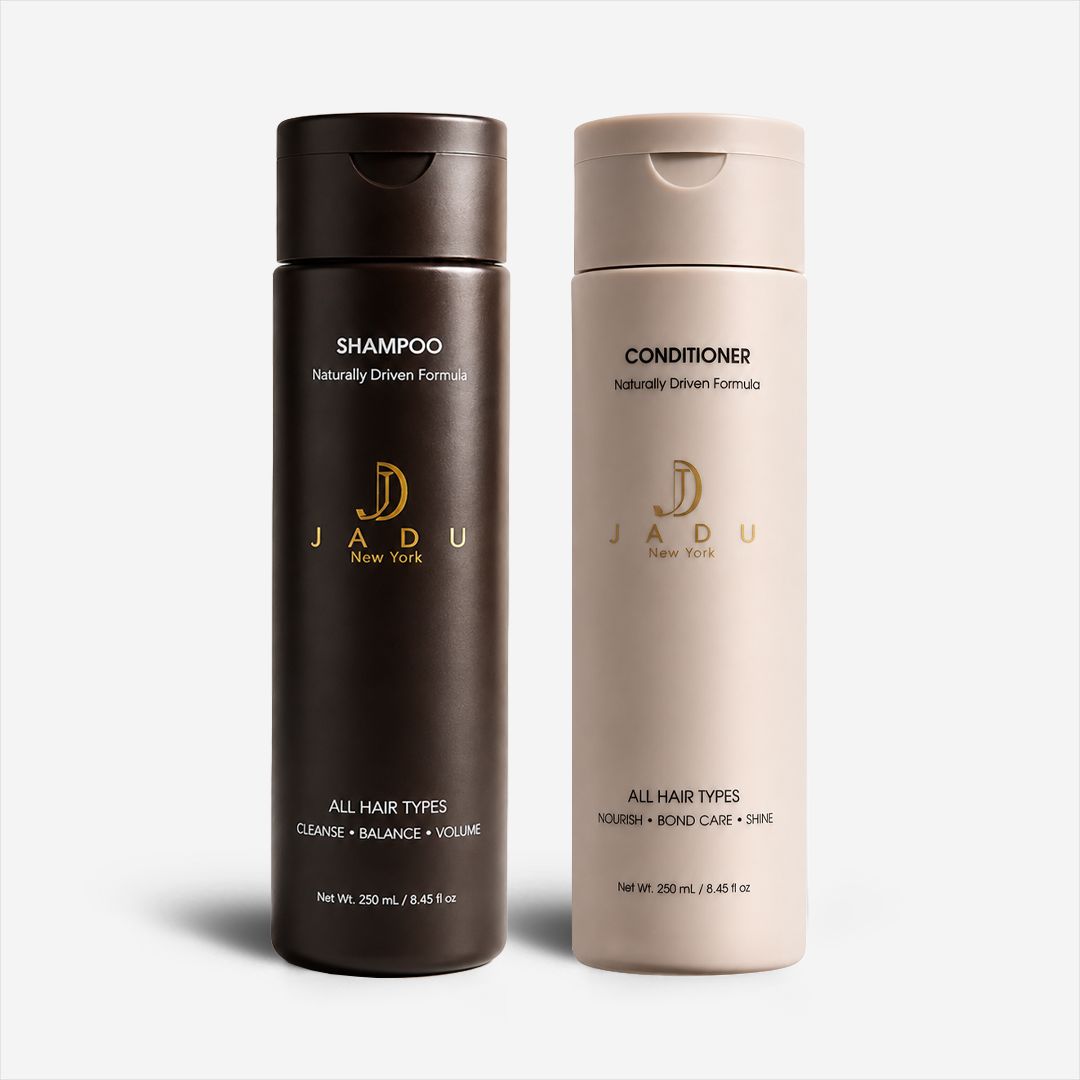
Work through one bucket at a time, and prioritize by frequency and contact. A couch you sit on for an hour matters less than a pillowcase against your face for eight. Within the on me category, that's usually shampoo and conditioner. Both get used several times a week, massaged into your scalp, and left on for the length of a shower.
This is the reasoning Jadu was built on. Anna started making these formulas after watching her grandchild react to conventional products, working from her family's botanical recipes: short ingredient lists, slow infusion, small batches, and the scalp treated as where hair health starts.
There's nothing novel about Anna's approach. Formulations looked this way before they got complicated. What we call clean now is mostly simplicity, priced like a luxury. Reading a label is how you tell the difference.


Comments